The daycare report says "ate all his lunch!" You read it while standing in the kitchen, staring at the untouched dinner your toddler just rejected for the third night in a row.
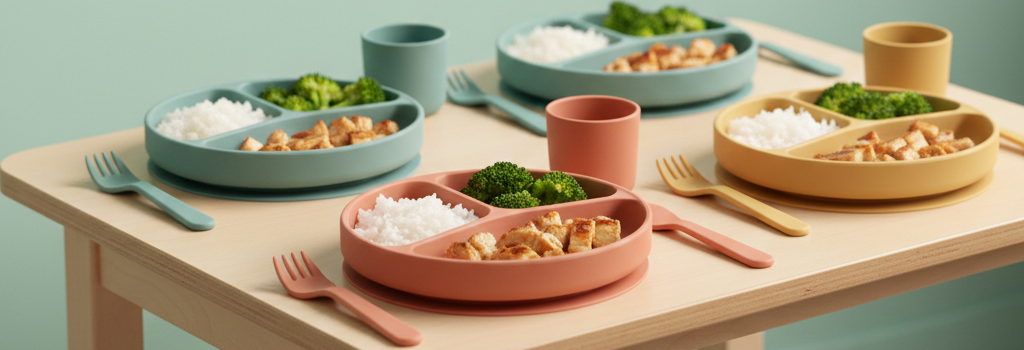
Chicken, rice, and broccoli. The exact same meal daycare served on Tuesday — which he apparently devoured.
You're not imagining this. And you're definitely not alone. If you spend any time in parenting forums, you'll see this question pop up constantly: "Why does my kid eat everything at daycare but nothing at home?"
The answer is actually really encouraging, once you understand it.
Why It Happens (The Science Behind It)
There are real, well-documented reasons your toddler eats differently in different environments. And none of them are because you're doing something wrong.
Peer pressure works — even on toddlers
This is the biggest factor, and it starts surprisingly young. When a toddler sees four other kids at the table happily eating green beans, their brain processes that as a powerful social signal: this food is safe, this food is normal, everyone's doing it.
At home, it's just you and maybe a sibling. The social eating effect is dramatically weaker. Research on children's eating behavior consistently shows that kids are more willing to try foods when they see peers eating them — not adults, peers. Your three-year-old doesn't care that you're eating the broccoli. They care that Liam at the next seat is eating it.
Different environment, different expectations
Here's something nobody talks about enough: home carries emotional baggage around food. Even in the most relaxed households, there's history. There was that time you really tried to get them to eat the pasta. That week you were stressed about their nutrition. The meal that ended in tears.
Daycare has none of that baggage. It's a clean slate. Food shows up, kids eat or don't, and nobody's emotional about it. That neutral energy matters more than most parents realize.
Structure kills grazing
Daycare runs on a schedule. Snack at 9:30. Lunch at 11:30. Afternoon snack at 3:00. That's it. No goldfish crackers at 10:15 because someone whined. No juice box at 2:00 because it was easier than saying no.
By the time lunch rolls around at daycare, your kid is genuinely hungry. At home? They probably had a handful of Cheerios 45 minutes ago, a few bites of banana, and some milk. They show up to dinner with a half-full stomach and zero motivation to try anything challenging.
Less pressure, more eating
Daycare teachers are wonderful, but they aren't emotionally invested in whether your specific child eats their broccoli. They serve the food, they sit with the kids, and they move on. There's no "just one more bite," no "you need to try this before you can have that," no disappointed sigh when the plate comes back full.
That calm, low-pressure energy is exactly what feeding specialists recommend. And it's really hard to replicate when you're the parent who's been worrying about their nutrition since they were born.
No screens, no toys, just eating
At daycare, mealtime is mealtime. Kids sit at a table together. There's no tablet propped up, no toy trucks on the table, no wandering around the living room with a pouch. The single-focus environment helps kids actually pay attention to their food and tune into their hunger cues.
What Daycare Gets Right (That You Can Steal)
Here's the good news: you don't need to enroll your dinner table at a daycare center. But you can borrow some of their most effective strategies.
Family-style serving
Most daycare classrooms serve food family-style — big bowls in the center, kids scoop their own portions. This gives kids control (a huge factor for picky eaters) and removes the pressure of a pre-plated meal that looks overwhelming.
At home, try putting food in serving bowls and letting your toddler serve themselves. Yes, they'll take only bread the first few times. That's okay. The act of choosing is what matters.
One meal, no substitutes
Daycare doesn't make a separate meal for the kid who doesn't like what's being served. There's one lunch. You eat it or you don't, and the next eating opportunity is afternoon snack.
This isn't about being harsh — it's about normalizing that meals are meals, not a negotiation. At home, this means resisting the urge to jump up and make a PB&J when dinner doesn't go over well. (Keep at least one safe food on the plate so they have something they can eat.)
Same time, same place, every day
Daycare eats at the same table, at the same time, every single day. That consistency builds expectations and helps little bodies develop reliable hunger rhythms.
At home, try to keep mealtimes within about a 30-minute window each day. Eat at the table — not the couch, not the car, not walking around.
Zero commentary
This is the hardest one for parents. At daycare, nobody says "good job eating your peas!" or "just try one bite of the chicken" or "you didn't eat enough." The absence of commentary — both positive and negative — removes all the pressure and lets kids focus on their own hunger and curiosity.
A real meal-and-snack schedule
The daycare schedule works because it creates genuine hunger. If you're offering food or drinks (other than water) every hour or two, your kid is never actually hungry enough to be motivated to eat something that isn't their absolute favorite.
Try three meals and two snacks at set times, with only water in between. This is the single most impactful change most families can make.
How to Recreate the Daycare Effect at Home
You don't need to overhaul everything at once. Pick one or two of these and try them for a couple of weeks.
Set a schedule and cut the grazing
This is the hardest change but also the most impactful. Set meal and snack times. Close the kitchen between them. Offer water freely but nothing else.
Your kid will protest. They might eat less for a few days. But within a week, most parents see a dramatic difference in how their child shows up to meals — actually hungry and more willing to eat what's served.
Eat with your kid
Not after they eat. Not while scrolling your phone at the counter. Sit down, put the same food on your plate, and eat together. You don't have to perform enthusiasm about the food. Just eat it normally. Your toddler is watching, even when it doesn't seem like it.
Serve family-style
Put food in bowls in the center of the table. Let your toddler serve themselves. Give them small utensils that actually work for scooping. Yes, they'll make a mess. The autonomy is worth it.
Stop narrating their eating
This one takes practice. No "great job!" when they eat a vegetable. No "come on, one more bite." No "you barely ate anything." Just... eat. Talk about your day, ask about their friends, discuss the dog. Make mealtime social, not food-focused.
Invite another kid over for dinner
This is the daycare cheat code. The peer effect works at home too. Invite a friend's kid over and serve a normal dinner. You might be shocked to see your child try something they've rejected fifty times, just because their buddy is eating it.
What NOT to Do
Don't guilt yourself
Home and daycare are fundamentally different environments. You are not failing because your child eats differently for you than for their teachers. You are their safe person. Sometimes that means they save all their big feelings (including food refusal) for you. That's actually a sign of secure attachment, not a parenting failure.
Don't interrogate the daycare staff
"What's your secret??" There is no secret. It's not a special recipe or a magic phrase. It's the combination of peers, schedule, neutral energy, and low pressure. You can recreate pieces of it at home, but you can't fully replicate the group dynamic — and that's fine.
Don't overhaul everything overnight
If you go from a grazing-all-day, screens-at-dinner, separate-meals household to a rigid daycare-style setup in one night, everyone will be miserable. Pick one change. Try it for two weeks. Then add another.
The Bigger Picture
Here's the thing that gets lost in the frustration: if your child eats at daycare, they CAN eat. The skill is there. The willingness is there. They aren't physically unable to eat varied foods. That's actually really good news.
What's happening isn't a feeding problem — it's an environment problem. And environments are things you can adjust.
Most parents find that as their kids get older and more socially aware (especially once school starts and they're eating in a cafeteria every day), the gap between daycare eating and home eating shrinks. The social motivation increases. Their comfort with variety grows.
In the meantime, steal what you can from the daycare playbook. Set a schedule. Reduce pressure. Eat together. And give yourself grace when dinner ends up on the floor instead of in their mouth.
They're going to be okay. And so are you.
FAQ
Should I send different food to daycare?
No. One of the reasons daycare works is that everyone eats the same thing. Sending special food separates your kid from the group and removes the peer pressure that drives them to try things. Let them eat what everyone else eats — even if it seems like something they'd never touch at home.
My toddler eats nothing at home AND daycare — is that different?
Yes, that's a different situation. If your child is consistently refusing food in all settings (not just being selective, but genuinely not eating enough), it's worth bringing up with your pediatrician. There could be underlying issues like oral motor difficulties, sensory processing challenges, or other factors worth investigating.
Will my kid ever eat as well at home as they do at daycare?
For most families, yes — it usually improves significantly by school age. As kids develop more independence and social awareness, the home-daycare gap naturally closes. The strategies above can speed that process along, but even without any changes, most kids expand their home eating over time.