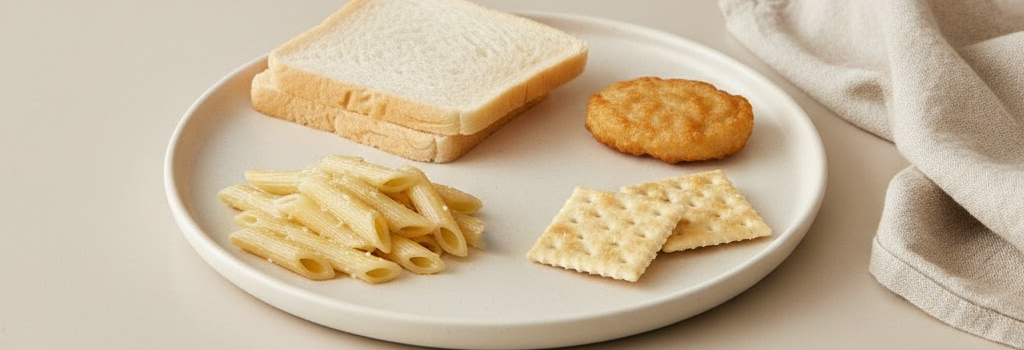
Pasta. Bread. Crackers. Chicken nuggets. French fries. Rice. If your child's diet looks like a monochromatic nightmare of beige, you're dealing with what parents often call the "beige food diet."
It's frustrating. It's worrying. And it's incredibly common.
Why Kids Gravitate Toward Beige Foods
There's actually science behind the beige food preference, and understanding it can help you work with it rather than against it.
Predictable Textures
Beige foods tend to have consistent, predictable textures. Crackers are always crunchy. Pasta is always soft. Bread is always the same. For kids who are sensitive to textures, this predictability is comforting.
Compare that to fruits and vegetables, which can vary dramatically in texture even within the same food. A perfectly ripe strawberry feels different than a slightly unripe one. That unpredictability can be genuinely distressing for texture-sensitive kids.
Mild Flavors
Most beige foods are relatively bland. They're not challenging kids' taste buds with strong flavors, bitterness, or complex taste profiles. Since kids have more taste buds than adults, this makes sense—they're seeking out foods that don't overwhelm their senses.
Visual Simplicity
Beige foods are visually simple and don't trigger the "suspicious" response that brightly colored or multicolored foods might. There's no green to inspect for, no seeds to pick out, no skin to peel.
Familiar Comfort
Many beige foods are also comfort foods—they're what kids grew up eating, what they've seen repeatedly, and what feels safe. When everything else in life is changing (as it constantly is for kids), familiar foods provide stability.
The Hidden Nutrition Problem
Here's the real concern with an all-beige diet: it's heavy on simple carbohydrates and often lacking in protein, healthy fats, vitamins, and minerals.
Kids on beige-heavy diets might be getting enough calories, but they can miss out on:
- Iron (important for energy and brain development)
- Vitamin A (vision and immune function)
- Vitamin C (immune function and absorption of iron)
- Fiber (digestive health)
- Protein (growth and development)
If you're worried about nutritional gaps, talk to your pediatrician about whether a multivitamin makes sense for your child.
Strategies That Actually Help
Work Within the Beige
Instead of fighting the beige preference, work with it:
Boost the nutrition of beige foods:
- Use whole wheat pasta instead of white
- Add protein to pancakes with eggs or protein powder
- Choose breaded chicken with actual chicken (not just filler)
- Make mac and cheese with added butternut squash puree (it blends right in)
Find slightly-less-beige versions:
- Sweet potato fries instead of regular fries
- Pita bread with hummus (a bit of color, still mild)
- Cheese quesadillas with a tiny amount of chicken
Introduce Color Slowly
Don't try to transform dinner into a rainbow overnight. Instead:
- Add one small piece of fruit alongside their beige meal
- Put a single baby carrot on their plate (no pressure to eat it)
- Let them see you eating colorful foods without commenting on it
The goal is exposure, not consumption. Every time they see a colorful food on their plate, they're getting more familiar with it.
Let Them Lead
Kids are more likely to try foods they've chosen themselves. Using tools like Pickles, where kids swipe through recipe cards and pick what looks appealing, can introduce variety without the battle.
When a kid says "I want to try that" because they picked it, they're way more invested than when you say "you're going to try this."
Make Dipping Available
Many beige-food lovers are actually texture-seekers who want that crunchy, smooth, predictable feeling. Dipping gives them control:
- Hummus for crackers and bread
- Ranch for anything (including beige foods—that's fine)
- Ketchup for proteins
- Yogurt for fruit
The dip provides a consistent texture bridge between their safe beige foods and new colorful options.
Foods That Bridge the Gap
These foods have worked well for families transitioning out of all-beige diets:
Smoothies: Technically not beige, but they're drinkable, which bypasses texture concerns. You can gradually add more fruits and vegetables.
Pancakes and waffles: Still beige but easy to add nutrition (bananas, berries, protein) either mixed in or as toppings.
Pizza: The cheese is beige-adjacent, and you can gradually add toppings.
Mashed potatoes: Already accepted, easy to add butter or even tiny bits of vegetables.
Oatmeal: Another beige base that can be enhanced over time.
When Beige Becomes a Bigger Concern
While a beige-heavy diet is common and usually temporary, talk to your pediatrician if:
- Your child is losing weight or not growing appropriately
- They seem fatigued or low energy
- They have fewer than 15-20 accepted foods total
- The diet is getting more restricted, not less
A feeding therapist can help if you're stuck, but for most families, patient exposure and reducing mealtime pressure eventually leads to more variety.
The Parent Perspective
If you're exhausted from worrying about your child's beige diet, here's some perspective from parents who've been through it:
Most kids expand their diets as they get older. The preschool years are often the peak of pickiness, and elementary school usually brings more flexibility (peer pressure to eat school lunch can actually help).
In the meantime, supplement where you can, keep offering exposure to colorful foods without pressure, and try not to let mealtimes become a battleground.
Your kid eating a plate of beige foods in a calm, happy mealtime is better than your kid eating nothing because dinner became a fight.
They'll get there. It just takes longer than anyone wants it to.